
Rainbow Yoga articles
We Ask Children to Listen to Their Bodies. Are We Listening to Their Voices?
Practical ways to listen to children in yoga, school and family life: meaningful choices, consent, accessible feedback and decisions that genuinely change.
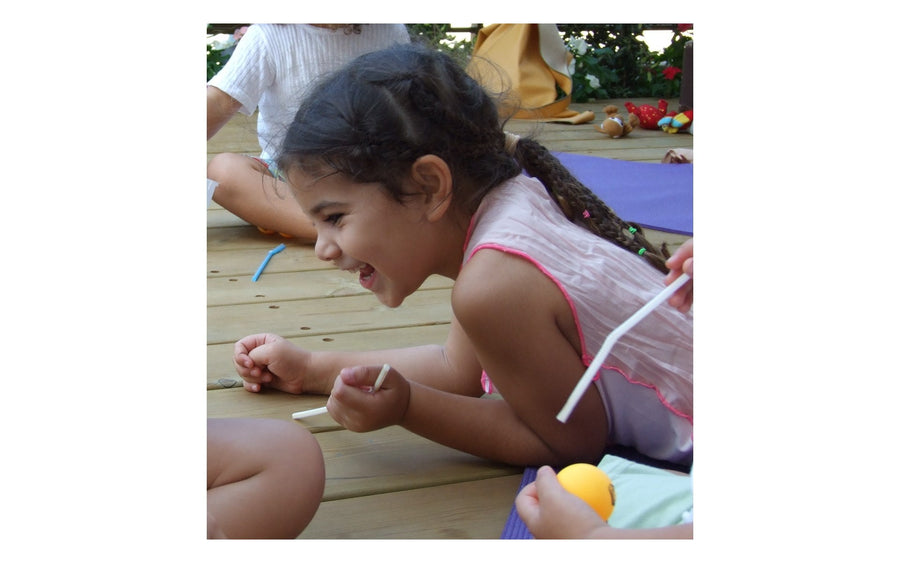
How to make children’s voice meaningful in kids yoga, classrooms and family life, with practical ways to share decisions without abandoning adult responsibility.
“Listen to your body,” says the yoga teacher.
A child sits up.
“Not yet. We’re all lying down.”
Another child says the music is too loud.
“It’s relaxing music.”
A third asks to do the activity alone.
“But today is about connection.”
The children have listened. The difficulty appears to be further up the management structure.
This imagined class contains a question worth carrying into every wellbeing programme: are we teaching children to notice their experience, or to report the experience adults have already decided they should be having?
Children’s voice is not another decorative value for the studio wall. It changes what happens when a child’s answer inconveniences the plan.
That does not mean children make every decision. A six-year-old’s sincere desire to balance on the windowsill does not oblige us to become an experimental gravity laboratory. Adults still hold safety, supervision and fairness. The interesting work is deciding what we can genuinely share.
Voice is a right, not a reward for eloquence
Article 12 of the UN Convention on the Rights of the Child recognises children’s right to express views on matters affecting them and have those views given appropriate weight. It does not require adults to agree with every request. Nor does it reduce participation to the children who speak most confidently in a circle. [1]
The practical distinction is important. “Everyone had a chance to say something” is not the same as “everyone had an accessible way to influence what happened”.
Some children speak quickly. Some need time. Some communicate through signing, drawing, movement, a device or a trusted communication partner. Others have learned that speaking to adults changes very little.
A room can be full of questions and still have very little listening.

Four things that make participation real
Laura Lundy’s participation model identifies Space, Voice, Audience and Influence. The European Agency’s Voices into Action framework applies these elements to learners and families in education. [2]
In a kids yoga class, translate them into four checks. Is there a safe opportunity to contribute? Can this child communicate in a way available to them? Is somebody actually listening? Will there be a response that children can recognise?
If the process ends after collecting opinions, we have built a suggestion box with no opening at the bottom.
New Australian research makes this distinction particularly concrete. Kathy Cologon’s 2026 methodological paper describes a three-month arts-based inquiry involving 26 children aged three to six and six practitioners in an inclusive early-childhood setting. It explores how children’s varied communication could be revisited, interpreted and acted on, rather than merely collected. This is a contextual account of practice, not an experiment proving that a particular participation routine improves wellbeing. [3]
Its challenge to us is useful: be willing to be changed by what children communicate.
The decision map: what is fixed, flexible and theirs?
Before class, divide decisions into three groups. This is a suggested planning exercise, not a validated framework.
Fixed: adults prevent harm, maintain supervision and stop humiliation. We do not negotiate whether children may be hurt, abandoned or pressured into unwanted contact.
Flexible: music, volume, sequence, length of an activity, grouping, props, the story and different ways to practise a skill. These can often change with the group.
The child’s own: whether to accept optional touch, share a personal feeling, volunteer for a demonstration, close their eyes or select a comfortable variation. A child can change their mind. Adults still explain any necessary protective action.
Say this plainly: “I’m responsible for keeping this space safe. You can help decide how we use it. You can always ask for something different.”
Then demonstrate it. Ask someone to change an imaginary activity. Accept the change without a sigh so theatrical that it requires its own lighting technician.
Children should not have to choose between having a boundary and keeping the adult pleased.

Tool 1: the two-minute class design meeting
Use this with primary-age children or older, adapting communication for your group.
Show three real options for one part of the session: a movement story, a cooperative challenge or a quieter exploration. Explain what each involves. Invite children to point, speak, draw or indicate a preference privately. Passing is welcome.
Do not automatically let a majority vote decide every person’s participation. A louder group’s preference does not erase one child’s access needs. Where possible, offer parallel versions or choose a shared plan with a meaningful alternative.
Name the outcome: “We’re starting with the movement story. There will also be a seated version and a place to watch before joining.”
The aim is not a miniature election campaign. It is an experience of having useful influence within a workable group.
Tool 2: make “stop” a skill adults practise too
Before any optional partner contact, rehearse a stop word and a visible gesture. Include the child’s usual communication system where relevant. Practise stopping immediately in an easy, no-pressure moment.
For example, partners mirror hand movements without touching. One signals stop; both pause. Then exchange roles. Solo practice with the teacher or simply watching is equally legitimate.
Explain that “stop” is not an accusation. It might mean discomfort, uncertainty, tiredness or simply wanting to change. Nobody has to present a convincing case to a courtroom of classmates.
When a child says “too much”, thank them and adjust. Do not applaud the boundary in theory and override it because the group photograph would look better with everybody holding hands.
Photography needs its own appropriate permissions and the child’s willingness. Participation is not a blanket agreement to become promotional content.
Tool 3: ask about the activity, not for a public emotional confession
Public feelings circles can be helpful for some groups. They should not become a daily entrance examination in vulnerability.
Try practical feedback questions: “Was that too quick, too slow or about right?” “Could you see the demonstration?” “What made joining easier?” Offer symbols, a private conversation, a drawing or an accessible communication aid.
There is no requirement to explain a diagnosis, disclose family difficulties or name a peer in front of everyone. Ask only for information you can use responsibly.
If a child moves away, treat it as a reason to check, not as a completed psychological assessment. They may need space, an explanation, a different role or something else entirely. “Would you like me nearby, or would more space help?” leaves room for their answer.
“I know your nervous system is avoiding connection” leaves rather less.
Tool 4: change one thing and show the change
At the end of class, invite one suggestion for next time. At the next session, report back before introducing a new activity.
“You said you wanted longer to invent the animal game. I’ve left more time today.”
“You asked for the lights to be dimmer. We can’t make this room dark because people need to move safely, but we can turn off that extra light and use a quieter corner.”
“You wanted everyone to play your game. Others can still choose not to. Let’s make a version people can join voluntarily.”
Honest limits are part of participation. What undermines trust is not every refusal; it is pretending a decision was open when it never was.
Keep a tiny adult note: what was requested, what changed, what could not change and what you will explain. No names or sensitive stories are needed for this routine.
Tool 5: let children edit the lesson, not just complete it
Teach a simple movement safely. Then invite children to change one element: the direction, speed, level, story or relationship to another person. A seated child can lead. A child who prefers not to demonstrate can describe or draw the idea.
Ask, “What should stay the same so everyone is safe?” Then, “What can we invent?”
This is where an adult’s restraint becomes a teaching skill. A child’s variation does not need to look like a slightly smaller version of yours.
Sometimes the game improves. Sometimes it becomes gloriously impractical. You can explore why without making its inventor the problem. “That version needs more space than we have. What could we change?” models both respect and reality.
For teenagers, hand over meaningful responsibility: design a warm-up, select appropriate music within agreed boundaries, or suggest a way to make a challenge less exposing. Do not confuse infantilising choices with inclusion.
Families: listening without losing the adult role
The same distinction matters at home. A child can influence when to practise, which shared activity feels appealing and whether a conversation happens immediately or after a pause. They cannot be made responsible for fixing adult stress or deciding whether safety matters.
A useful question is: “What would make this easier to do together?” It is more specific than “Why are you always difficult?” and more honest than “Would you like to do the thing I have already decided we are doing?”
Research on the Australian Tuning in to Kids programme provides evidence that adults’ responses are a worthwhile intervention target. Its research programme includes a randomised trial with 216 parents of preschoolers, finding improvements in supportive emotional responses and reported child behaviour compared with controls. Those findings concern a structured parenting programme, not the brief suggestions in this article. [4]
We can take the direction seriously without borrowing the programme’s results for our own five-minute game.
At home, try one repair: “I asked what you thought, then interrupted. Let’s start again.” A changed adult action is more convincing than a lecture on the importance of communication.
When listening reveals harm
Children’s voice is not a substitute for safeguarding. Do not invite traumatic disclosures as a classroom activity. If a child tells you something concerning, listen calmly, avoid leading questions, do not promise secrecy and follow the relevant safeguarding and reporting route. Seek urgent help when there is immediate danger. Know the requirements for your role and location before teaching. [5]
Nor should “we listened to both sides” become a reason to leave bullying unresolved. Adult responsibility includes protection and appropriate action, not endless discussion while the same child keeps being harmed.

What sort of future are we rehearsing?
We often describe the future in terms of skills: adaptability, collaboration, creativity, ethical judgement. I think those aspirations become more credible when children encounter them in the present organisation of their lives.
If we want people who can challenge harmful decisions, their first respectful objection should not be treated as insolence. If we want cooperation, we need experience negotiating differences rather than practising obedience under a friendlier name.
This is not a claim that a class voting on music will repair democracy. It is a question about consistency. What do our everyday uses of power teach?
Children’s voice should not depend on whether their suggestion is cute enough to include in the newsletter. It matters when they say the class is too loud, the game feels unfair or our explanation does not make sense.
That is where the grown-up curriculum begins.
Start tomorrow with one real decision
Identify one thing you are genuinely willing to change. Offer children an accessible way to respond. Listen without defending the original plan. Act, or explain the limit. Return to them afterwards.
The test is not how often we ask children to speak. It is whether they can recognise that we heard them.
Does child voice mean children run the class?
No. Adults remain responsible for safety, access and supervision. Share decisions that are genuinely open and explain those that are not.
What about a child who does not speak in the group?
Offer other communication routes, more time and a private or supported response. Do not equate spoken confidence with understanding or willingness.
Must I accept every suggestion?
No. Acknowledge the suggestion, explain a refusal honestly and explore alternatives where possible. Never promise influence you do not intend to provide.
Use the free Rainbow Yoga Play Audit to examine choice alongside time, space, belonging and relationships. Continue with family connection activities or our article on how adults speak to children.
Photographs: Rainbow Yoga archive. These images illustrate shared practice and are not photographs of the research participants. Research checked 14 October 2026.
Sources and reading
- UN Convention on the Rights of the Child, Article 12.
- Voices into Action: European Agency framework, applying Laura Lundy’s Space, Voice, Audience and Influence model.
- Cologon (2026), From space and voice to audience and influence. Methodological reflection from an Australian inclusive early-childhood project; published online 17 August 2026.
- Tuning in to Kids: research from the programme team. Structured parenting interventions; these outcomes should not be attributed to Rainbow Yoga activities.
- Australian Institute of Family Studies: responding to children’s disclosures of abuse.
Activities are practical teaching proposals, not a validated intervention. Adapt to age, access, communication, safeguarding and the setting.
Keep exploring
More from Kids Yoga Articles
Kids Yoga Articles
Play, Connection and Kinder Teaching: Your Rainbow Yoga Reading Toolkit
Free kids yoga resources for teachers and families: a printable Play Audit, family activities, child voice, belonging and practical adult-lang...
Read articleKids Yoga Articles
Five Minutes of Family Yoga: Less Perfect Poses, More Connection
Try five minutes of family yoga with no equipment or perfect poses: simple, inclusive games for choice, shared movement and connection, plus t...
Read articleKids Yoga Articles
What If Children Aren’t Disengaged From Learning, but From the Way We Teach It?
Rethink student disengagement through meaning, clarity, access, challenge and belonging, with practical teaching tools and a playful habitat l...
Read article
Comments